Tuesday, June 27, 2006

Gay from birth?


From Drudge we read this report

Here's the punch line of the article. I am adding emphasis in order to comment below.


"These results support a prenatal origin to sexual orientation development in men."

He suggests the effect is probably the result of a "maternal memory" in the womb for male births.

A woman's body may see a male foetus as "foreign", he says, prompting an immune reaction which may grow progressively stronger with each male child.

The antibodies created may affect the developing male brain.

In an accompanying article, scientists from Michigan State University said: "These data strengthen the notion that the common denominator between biological brothers, the mother, provides a prenatal environment that fosters homosexuality in her younger sons."

"But the question of mechanism remains."

Andy Forrest, a spokesman for gay rights group Stonewall, said: "Increasingly, credible evidence appears to indicate that being gay is genetically determined rather than being a so-called lifestyle choice.

"It adds further weight to the argument that lesbian and gay people should be treated equally in society and not discriminated against for something that's just as inherent as skin colour."
Well, no doubt there is likely a possible biological factor that can be identified as a part of the development of homosexuality. However, let's look at what the article actually reports.

1. The scientists are looking for the "causative" mechanism to account for a phenomenon -- why the chances of a man being homosexual increase in relation to the greater number of older brothers he has. But, the article posits a hypothesis -- antibodies formed by the mother MAY affect male fetal brain development. That is a hypothesis to be tested, not a scientific conclusion. Since they don't find a correlation between social factors and increased homosexuality, the scientists observe that the lack of said social factor being identified strengthens the notion that there is a intra-uterine mechanism. That is not a proof and anyone who tries to imply it is is being either inexact or misleading.

2. But even if it turns out to be the case, one has to ask what it actually implies. It does not imply that such a state of affairs is one to be applauded or acknowledged. For instance, we find many, many human conditions that are caused because of things that go on in the womb during the development of the child. But, that does not mean that the status of those conditions is automatically affirmed as good. Some new research suggests that obeseity and diabetes result from developmental issues that are not what they should be in the womb. Hence, even if the research turns out to be correct and the hypothesis were to be shown to be adequate, one can still ask what it implies.

3. So, the claims by Andy Forrest that there is credible evidence that appears to indicate that being gay is genetically determined is far from true. First, a hypothesis that attempts to make sense of phenomena is not the same thing as credible evidence. So, it cannot appear to indicate anything in particular. But even more importantly, the hypothesis is not anywhere near concerned with homosexuality as genetically determined. The kind of biological determinations that the hypothesis suggests are not genetic, they are hormonal or electro-chemical, but they are not genetic. That is a different issue all together.

4. All things being equal then, this new research can provide us with some interesting insights and some further information to consider, but it does not trump the further metaphysical and moral questions that Christian faith has raised about the nature of homosexuality across the ages. Those are questions that cannot be dismissed.


Monday, June 26, 2006

Missing a point. . . .


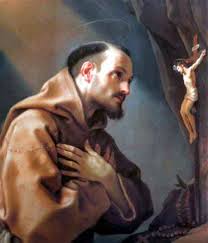
THE PICTURE IS OF ST. FRANCIS -- A MAN WHO COURAGEOUSLY AND SELF-DENYINGLY BORE WITNESS TO CHRIST AND THE GOSPEL


Diana West, who writes for Townhall.com misses an important point in THIS article.

She is writing about the problem that some of the moral introspection that some Americans engage in (read liberals and the media) is ultimately counter productive for the purposes of defending American interests. She writes:

If we still valued our own men more than the enemy's and the "civilians" he hides among -- and now I'm talking about the war in Iraq -- our tactics would be totally different, and, not incidentally, infinitely more successful. We would drop bombs on city blocks, for example, not waste men in dangerous house-to-house searches. We would destroy enemy sanctuaries in Syria and Iran, not disarm "insurgents" at perilous checkpoints in hostile Iraqi strongholds.

In the 21st century, however, there is something that our society values more than our own lives -- and more than the survival of civilization itself. That something may be described as the kind of moral superiority that comes from a good wallow in Abu Ghraib, Haditha, CIA interrogations or Guantanamo Bay. Morally superior people -- Western elites -- never "humiliate" prisoners, never kill civilians, never torture or incarcerate jihadis. Indeed, they would like to kill, I mean, prosecute, or at least tie the hands of anyone who does.

This, of course, only enhances their own moral superiority. But it doesn't win wars. And it won't save civilization.

Why not? Because such smugness masks a massive moral paralysis. The morally superior (read: paralyzed) don't really take sides; don't really believe one culture is qualitatively better or worse than the other. They don't even believe one culture is just plain different from the other.
She observes an important point in that there are many, many persons who (on the left) talk as though they can live as citizens of no particular culture, without allegiances or commitments other than to some abstract ideals about multi-cultural relativism and the equality of persons. We always have to live our lives from a particular point of view and with particular commitments. Hence, her critique of those who embrace multi-culturalism and moral relativism are on target.

I am concerned, however, with Christians who might read her criticism and not reflect a fully as they might need to about the nature of a Christian response to the war.

What West does not envision, in her Spartanesque retrenchment of moral certitude based on a certainty of the nobility and necessity of American interests, is that a Christian might have a completely non-liberal rationale for taking pause about the "war on terror." Rather, than being unclear about the questions of moral superiority of -- say -- American democratic respect for human life and being fuzzy about the barbarity of the jihadists acts in comparison to those of the American armed forces, a Christian might, indeed, embrace resistance to the war and to the violence necessary to successfully wage because they perceive in Jesus Christ that God's kingdom demands their first and foremost fealty. So, one might not accept the particular moral calculus that West suggests has to be employed. One might, instead, insist that God's kingdom on earth demands of Christian disciples an embrace of peaceableness, non-violence, and courageous witness against the God-denying nature of all violence.

A Christian who embraces this understanding of the meaning of Jesus Christ's life, death, and resurrection would not be guilty of the moral equivalancy that leads to "moral paralysis" as West describes it. Rather, the point of such a Christian's resolve would be to declare witnes to the reality that in Jesus Christ we have learned that one does not overcome evil with another act that is itself (even if remarkably less so) evil. That a Christian is called to bear the abuse of others in the name of Jesus, because in Jesus Christ the world has been overcome. But, the perspective of this Christian pacificist would not be passivity. Rather, it would entail a courageous engagement with acts of self-giving love on behalf of one's fellow citizens, as well as one's enemies. Such a Christian might believe that the best service he could give to his country would be to insist that focusing of Abu Ghraib or other American failures far from being "a good wallow in Abu Ghraib, Haditha, CIA interrogations or Guantanamo Bay" actually helps approximate the values of the kingdom that Jesus came to inaugurate and make possible.

One can disagree with that kind of interpretation of the meaning of the Gospel in relation to political exigency, of course. But, let's be clear, it is not an example of failing to be clear about moral issues. Rather, it is a perspective that will not allow a moral issue to be discussed outside of the universal and all-inclusive claim of the Christian faith that Jesus Christ is Lord of all life -- even one's citizenship in a democratic republic that is morally superior to a barbaric jihad.

Saturday, June 24, 2006

Thomas Aquinas on God's Presence to all things


CHAPTER LXVI—That nothing gives Being except in as much as it acts in the Power of God

NOTHING gives being except in so much as it is an actual being. But God preserves things in actuality.

5. The order of effects is according to the order of causes. But among all effects the first is being: all other things, as they proceed from their cause, are determinations of being. Therefore being is the proper effect of the prime agent, and all other things act inasmuch as they act in the power of the prime agent. Secondary agents, which are in a manner particular determinants of the action of the prime agent, have for the proper effects of their action other perfections determinant of being.[1]

6. What is essentially of a certain nature, is properly the cause of that which comes to have that nature only by participation.[1] But God alone is being by essence, all others are beings by participation. Therefore the being of everything that exists is an effect properly due to God; so that anything that brings anything else into being does so insomuch as it acts in the power of God.

Hence it is said: God created all things to be (Wisd. i, 14).


CHAPTER LXVII—That God is the Cause of Activity in all Active Agents

AS God not only gave being to things when they first began to be, but also causes being in them so long as they exist (Chap. LXV); so He did not once for all furnish them with active powers, but continually causes those powers in them, so that, if the divine influx were to cease, all activity would cease.

Hence it is said: Thou hast wrought all our works in us, O Lord (Isa. xxvi, 12). And for this reason frequently in the Scriptures the effects of nature are put down to the working of God, because He it is that works in every agent, physical or voluntary: e.g., Hast thou not drawn me out like milk, and curdled me like cheese? with skin and flesh thou hast clothed me, with bones and sinews thou hast put me together (Job x, 10, 11).

From -- OF God and His Creatures

It is late; and one should know better than to post anything about Aquinas when sleep is nigh, but here goes anyway.

Such a perspective as this, I think, can help greatly in overcoming many of the contemporary arguments over God's sovereignty. The extremes are as follows. For some, sovereignty must mean that God causes all things by a particular action or a particular will in every instance. For others, sovereignty is a notion that does away with human freedom, hence they are willing to redefine it -- almost away. For others sovereignty means God is never not able to cause or to stop an action. Hence, all that occurs happens because God allows it to occur. For others, God is open and therefore the world is undetermined.

But if Aquinas is anywhere near correct in his formulation of the relationship that creatures have to God, sovereignty can take on a new meaning, one which does acknowledges God's involvement in all things but does not deny human freedom. On this view, no act can take place without the "divine influx" (as Aquinas puts it) making that action (excuse the neologism) existible. Each and every thought, act of an agent, or event among non-agent entities (ex. growing flowers and speeding comets) is only possible as God shares his own activity of existing with them.

Hence, we can begin to meditate on the great mystery of iniquity (as St. Paul says) as well as the tragedy of sin. No sinful act by any human being can take place apart from God's enabling the very existence of the act by allowing it to participate in his own activity of existing. Human desire and human will, therefore, as existential acts have no being apart from God. But, (and here is the mystery) God enables free acts to exist that are not blue-printed out by his eternal design, but nonetheless are only possible only as he gives the reality of existence in the human agent to the POSSIBILITY of free acts, as well as the acts themselves performed by said agents. Freedom of response to God or freedom of rejection of God, therefore, are enabled by his own design as he allowes these to participate in his existence.

The tragedy is that the freedom God's own being enables even a sinful act to have existence, in that it partakes in a paltry way of God's own freedom of existence. But the sinful act introduces something into the participatory relationship that is contrary to God's will for his creation and its character. This, of course, does not affect God, because his essence cannot change. But the act that is contrary to God's nature can, and does, disrupt the way one participates in God's life and being.

Hence, God is the sovereign cause of all acts, in that he -- and only he -- enables their existence by his own being. But, what he enables in agents that bear his image is a shadowy reflection of his freedom of act. One which eventuates in the human agent sin freely committed. But that same participation -- graciously bestowed in creation and by God's ongoing sustaining presence -- enables "whosoever will" to respond to him in Christ freely, as well. Here the notion of irrestibility of grace, becomes unnecessary. This response is not a human initiative, for nothing is ultimately based in human initiative. Thanks be to God that in Christ we find ourselves reordered and reclaimed to rightful and transformed participation in God's life.

Friday, June 23, 2006

The NY Times as an useful idiot


During the Cold War between Soviet Communism and the United States, communist party officials would refer to persons who, for various reason, could be co-opted to their cause as "useful idiots." These were folk who did not understand the real nature of the Soviet-communist threat to the ideals of a democratic republic that values person liberty, but they found communism a kind of avant garde or radically chic philosophy to play with.

Well, the New York Times has proved its mettle as a "useful idiot," but not for the now defunct USSR. Rather, they are useful for the purposes of radical islamist terrorism. The proof: the publication of THIS REPORT.

Data from the Brussels-based banking consortium, formally known as the Society for Worldwide Interbank Financial Telecommunication, has allowed officials from the C.I.A., the Federal Bureau of Investigation and other agencies to examine "tens of thousands" of financial transactions, Mr. Levey said.

While many of those transactions have occurred entirely on foreign soil, officials have also been keenly interested in international transfers of money by individuals, businesses, charities and other groups under suspicion inside the United States, officials said. A small fraction of Swift's records involve transactions entirely within this country, but Treasury officials said they were uncertain whether any had been examined.

Of course, the Times thinks it has a right to publish any and all things that it uncovers, but it does not report all it uncovers -- no paper does. So, one has to wonder how the Times decides to print such a story, especially when the context in which it arose was the successful squashing of a terrorist plot to blow up the Sears building in Chicago and the FBI headquarters in Miami. And it is even further ironic when the Times own reporting of the matter acknowledges that the practice is entirely within the law of the United States of America. So, where is the news value. No great government conspiracy is uncovered, not even an illegality. Just something sensational that can arouse certain left-wing passions, I guess.

As a Christian, I am quite aware of the potential evil that an unaccountable government can be. It can become demonic. But, a Christian has to recognize that government has a provisional role to play in the purposes of God. And when some other entity, such as the New York Times, undercuts the ability of the government to carry out a proper provisional role (i.e., protecting the citizens of a nation) then one must say -- enough!

It is a well-known reality that the NYT management hate the Bush administration. All well and good. But, reporting in detail a strategy that has been effective in protecting innocent Americans from terror crosses the line. Don't they get it! If (or God forbid when) another terrorist attack occurs, it will not be politicians that the Times despises who will be killed. It will be the average Joe or Jane in America. Should such a horror occur, no doubt the good reporters and editorialists at the Times would tell us that the Bush administration had not done enough to protect us then.

Get real, you people at the Times.

Thursday, June 22, 2006

The Science Mythology


Rev Sam at Elizaphanian has a great post in which he describes the mythology that undergirds modern scientism in the West. Read it and benefit

Hat tip to Patrik at God in a Shrinking Universe.

Wednesday, June 21, 2006

Loving humanity, but hating people. . . .

That's an old line about persons who in principle think human beings ought to be valued, but who find it difficult to care about the individual persons they encounter with all of their messiness and their unsavory behavior. Well, environmentalists (of a certain stripe) are spewing a similar swill.

Delroy Murdock tells us about it here
"We're no better than bacteria!" University of Texas biologist Eric Pianka recently announced. "Things are gonna get better after the collapse because we won't be able to decimate the Earth so much," he added. "And, I actually think the world will be much better when there's only 10 or 20 percent of us left." Pianka dreamed that disease "will control the scourge of humanity." He celebrated the potential of Ebola Reston, an airborne strain of the killer virus, to make Earth nearly human-free. "We've got airborne 90 percent mortality in humans. Killing humans. Think about that. . . .

Finnish environmentalist Pentti Linkola calls humanity a sinking ship with 100 passengers and a lifeboat for 10. "Those who hate life try to pull more people on board and drown everybody. Those who love and respect life use axes to chop off the extra hands hanging on the gunwale."


Me: It is really interesting to read of Linkola speak of loving and respecting "life." What an abstract way of thinking. There is no such thing as life, except as one finds it in particular living beings. If "life" is found only in particular living beings (which it is), then the only way to care about "life" is to care for each and every living thing. Furthermore, if one cares about life in its highest form, then the only way to care about "life" in its highest form is to care for each and every individual (at least in someway). (Those environmentalist such as the Texas University biologist Pianka who suggest that there is no difference between forms of life suffer from a profound cognitive defect. The question is not whether or not humans are better than bacteria. Human life is a much more complex and developed and richer form of life. Unless the good Dr. Pianka thinks that the capacity to care about other forms of life is itself not that valuable. The capacity to care is human == bacteria don't care at all about us)

Such silliness is hard to take seriously, but alas some will.....

The Lottery Problem

Donald Sensing over at "One Hand Clapping" has this great post with links on the regressive nature of state lotteries. They really do hurt the poor!

Read it

Monday, June 19, 2006

New Episcopal Bishop says homosexuality is not a sin


Read it here!

This report set me to wondering: in the theology of the good bishop and those who think as she, what defines a sin? To what does one refer for guidance about the qualifying acts? How might one adjudicate between acts that they are right and wrong or good and bad?

Surely not the scriptures, for she is willing to dismiss the scriptural passages that clearly indicate that homosexuality is a sin. Thus, she has some standard of judgement by which she can pick and choose the moral teaching or claims in holy writ that are unchangingly true and those that are culturally condition. What, I wonder, would it be?

Neither can she look to the tradition of the Church, for the teaching of the Christian Church has, until quite recently, been unnuanced in its rejection of homosexual practice. Thus, she has some standard of judgement by which she decides what part of the Church's moral reasoning to set aside. What, I wonder again, would it be?

Undoubtedly, her standard is essentially human experience understood in the most individualistic of terms. Add to that a good dose of Fletcher's situation ethics in which the vague idea of "love" is all-determinative; and also simply sentimentalize the notion that God is Love. Hence, the subjective self in its own inner experience that begins to determine for the bishop the truth of anything. A person experiences him or herself in a particular way and has no otehr frame of reference for said experience, so -- the bishop must conclude -- God has made this person to be the way she or he experiences her or himself. Why else would she reject the church's teaching and the scriptural witness?

As she says:

"God creates us with different gifts. Each one of us comes into this world with a different collection of things that challenge us and things that give us joy and allow us to bless the world around us," she said.

"Some people come into this world with affections ordered toward other people of the same gender and some people come into this world with affections directed at people of the other gender."

Yet, how would she make this claim, unless she accepts the primacy of individual self-definition to be the trump card in such a moral question?

As I argued in another context regarding a United Methodist bishop's embrace of homosexuality for reasons probably quite similar to the Episcopal leader's:

Were Bishop Sprague’s theological agenda to carry the day and human experience become determinative for doctrine and practice we would, in the words of Paul, be of all people the most miserable. Once this turn to the subjective self occurs, we have no self-transcending reference in terms of which we might talk to one another about ultimate things and the meaning of our lives. This is the case because one person’s experience does not necessarily have anything to do with that of another. In seeking to help us to value others, Sprague produces an ethic that isolates each of us in the dark loneliness of the self and its private, incommunicable experience. Contrast this sad individualism with Jesus’ own command that each of us repent and believe in him. Christ calls us to find our lives not in his personal experience or example but in his redeeming work accomplished for us on the Cross and made complete in the Resurrection. He affirms, redeems, and restores the goodness of God’s created order. Considered in that light, Jesus’ invitation and command that we come and be one with him and "his Father," and thus one with one another, is a summons to find our lives being made into a new and true humanity.
The great irony of both bishops' starting point is that one category of individual experience is authoritative in this matter -- the experience of the purportedly gay person. But, in the Christian experience, the issue is, as are all questions of moral and spiritual living, much more foundational and complex. Let the debate, then, contintue.

Sunday, June 18, 2006

The Ditsy (Oh, I mean Dixie) Chicks


Natilie Maines, the provocateuress of the Dixie Chicks, recently gave an interview to the UK Telegraph. In it she speaks about the problem she has with patriotism in the United States of America. Speaking aboaut other country singers who wrote songs in support of American sentiments of flag and country (and mom and apple pie), she opines:

"A lot of pandering started going on, and you'd see soldiers and the American flag in every video. It became a sickening display of ultra-patriotism."

"The entire country may disagree with me, but I don't understand the necessity for patriotism," Maines resumes, through gritted teeth. "Why do you have to be a patriot? About what? This land is our land? Why? You can like where you live and like your life, but as for loving the whole country… I don't see why people care about patriotism."

Ms Maines captures the essence of western post-modernism when she says "I don't see why people care about patriotism." Surely the irony of her words are lost on the verbose singer. The very culture that allows her such freedom of speech, that affords her the opportunity to become wealthy as a song writer, that acknowledges her rights and freedoms as a woman, that . . . . well, you get the picture . . . that land is, at least, deserving of her gratitude.

Perhaps she thinks that patriotism is gingoism or chauvinism. And there are certainly alot of folks who are both of the latter. But, even if one does not like the war or the current administration, surely the constitutional democracy that has allowed her life to be launched into stardom deserves some recognition and some thankfulness. A country that protects her property rights enables her to control her songs and make money from them. A country that increasingly acknowledges the rights of women gives her a platform to speak about things she is not qualified to speak about. A country that many people died to make possible has acknowledged in its constitution her inalienable rights as a human being. So, a little gratitude might be in order, even if she does not love the whole country.

But then again (back to post-modernism), she represents the thinking of a lot of people who are incapable of admiting that their lives have been made possible by the culture and country they live in. She and many others feel no sense of appropriate dependence on history or on others. The think they live in mid-air, I guess. Or they are deluded into thinking that they are so incredibly talented or special that their lives would be wonderful no matter where they had been born.

If The Dixie Chicks want to be a "citizens of the world" rather than acknowledge their debt to the country that has made their life possible, they could at least establish some credibility if they would go to Sudan and care for the orphans or speak out against the mistreatment of women in Saudi Arabia or endeavor to help Aids victims in Africa by speaking out against the cultural practices of a continent that treats women like property to be passed along or inherited.

But instead we are treated to lines like this, from Ms Maines' co-Chick, Emily Robison, commenting on the crash of The Chicks popularity after Ms Maines infamous public statements about the war and President Bush.

"A lot of artists cashed in on being against what we said or what we stood for because that was promoting their career, which was a horrible thing to do."
I guess though, since they are still "chicks" and not yet mature women, one can be amused at their self-obsession..


GODLESS -- Ann Coulter's provocative glimpse at religion

She's received a lot of criticism, but if anyone would read a few pages they will find a substantive argument that ought to be engaged.

Here's an example:

The absence of a divinity makes liberals’ belief system no less religious. Liberals define religion as only those belief systems that subscribe to the notion of a divine being in order to dismiss other religions as mere religion and theirs as something greater. Shintoism and Buddhism have no Creator God either, and they are considered religions. Curiously, those are two of the most popular religions among leftists—at least until 9/11, when Islam became all the rage.

Liberalism is a comprehensive belief system denying the Christian belief in man’s immortal soul. Their religion holds that there is nothing sacred about human consciousness. It’s just an accident no more significant than our possession of opposable thumbs. They deny what we know about ourselves: that we are moral beings in God’s image. Without this fundamental understanding of man’s place in the world, we risk being lured into misguided pursuits, including bestiality, slavery, and PETA membership. Liberals swoon in pagan admiration of Mother Earth, mystified and overawed by her power. They deny the Biblical idea of dominion and progress, the most ringing affirmation of which is the United States of America. Although they are Druids, liberals masquerade as rationalists, adopting a sneering tone of scientific sophistication, which is a little like being condescended to by a tarot card reader.

Liberals hate science and react badly to it. They will literally run from the room, lightheaded and nauseated, when told of data that might suggest that the sexes have different abilities in math and science. They repudiate science when it contradicts their pagan beliefs—that the AIDS virus doesn’t discriminate, that there is no such thing as IQ, that nuclear power is dangerous and scary, or that breast implants cause disease. Liberals use the word science exactly as they use the word constitutional.

. Everything liberals believe is in elegant opposition to basic Biblical precepts.

- Our religion says that human progress proceeds from the spark of divinity in the human soul; their religion holds that human progress is achieved through sex and death.

- We believe in invention and creation; they catalogue with stupefaction the current state of our diminishing resources and tell us to stop consuming.

- We say humans stand apart from the world and our charge is Planet Earth; they say we are part of the world, and our hubristic use of nature is sinful.

- We say humans are in God’s image; they say we are no different morally from the apes.

- We believe in populating the Earth until there’s standing room only and then colonizing Mars; they believe humans are in the twilight of their existence.

Ms. Coulter is, for my taste, too shrill; and her sweeping dismissal of all things "liberal" is too categorical, I think, for intellectual honesty, but she is really on to something.

Liberalism is, in fact, an all-encompassing ideology. It fits, therefore, the definition of religion. Paul Tillich famously noted that whatever is the ultimate focus of one's interest and dependence and commitment is one's god. Living is a culture that has been profoundly shaped by theism, we often fail to realize that, as Coulter points out, non-theistic ideologies count as religions. It behooves us, therefore, to make this point again and again in the cultural debates of our day.

But, if liberalism is a religion (as I think it would qualify), what is the Christian response in light of the American experiment. Many would have us turn the all-guiding light of liberalism and instead endeavor to establish a more "christian" nation. However, one of the things that we conservatives must remember is that the Gospel of Jesus Christ is a critique of every and any ideology. One can easily make an idol when endeavoring to influence the political debate with Christian truths.

Hence, when conservative Christians read "Godless," let us benefit from the way that Ms Coulter's polemical and acidic critique lays bare the liberal pretensions to neutrality. She shows, what John Howard Yoder pointed out in a much different context, that there is no such thing as non-commital positions regarding metaphysics, morals, and spiritual questions. (Yoder helped us see that every truth claim is just one more "provincial" way of looking at things.)

However, we must remember that Christ's kingdom is "not of this world." It cannot, therefore, be reduced to any particular political ideology. So, it is not enough merely to embrace conservative politics and then add a little Jesus into the mix. What, for example, are conservatives to make of God's insistence in the Old Testament that the poor should be cared for or of Jesus' call to "turn the other cheek." In a culture filled with liberal religionists who both deny the truth claims of Christianity and despise conservative, Bible-believing Christians, will we forget that Jesus said to "do good to those who hate you" or to love one's enemies or to consider oneself blessed when persecuted. Far too often, conservative Christians complain about liberals far more than we live as Christ's disciples in the midst of liberals.

Coulter's book, short-comings and all, is an excellent critique, but . . . . . . .

What does God require of us, then?

Friday, June 16, 2006

Father's Day and Dad's Importance

New research has and is showing that Father's are much more important than previous social scientists thought. Here's a very good article that shows why.


Here's a line from the article:

Father involvement makes a real difference. Whether the outcome is intellectual development, sex-role development, or psychological development, most kids do better when their relationship with Dad is close and warm, whether Dad lives with them or not.


Now there is a big difference between being a father and being a sire. In our culture today many men sire offspring, but what is lacking is men who will step up to the plate and be the fathers of their children.

Honesty demands that we acknowledge that women cannot adequately raise children on their on as a rule, although there is the occassional remarkable example. But, that is not a statement that denigrates a woman's ability. Rather, it is statistically true; and it is statistiacally borne out, because God's design is for children to be reared in a family where the mother and the father acknowledge the child's claim upon them and acknowledge their mutual responsiblity for one another and their children. That is what marriage really is.

So, on this Father's Day, thank your Father, if he helped establish you in life. If he didn't, grieve. If you are a father, commit yourself to being what God would have you be.

Here is a link to Rich Lowry's very good essay on this subject at National Review Online.

A truly great article on what's at stake in the "same-sex_ marriage movement

Jennifer Roback Morse explains it well.

A New Study finds that Doctors who "assist" persons in suicide suffer themselves

This is an interesting study.

Although it will be rejected and ignored by the likes of the Hemlock Society and other pro "assisted suicide" networks, it is an important beginning study. If other similar studies bear-out the findings of this research, it will be a significant matter.

When doctors suffer negative effects from being a physician who assists in ending a patient's life, the find themselves being
profoundly adversely affected, being shocked by the suddenness of the death, being caught up in the patient's drive for assisted suicide, having a sense of powerlessness, and feeling isolated. There is evidence of pressure on and intimidation of doctors by some patients to assist in suicide."

"There is evidence of pressure on and intimidation of doctors by some patients to assist in suicide. Many doctors who have participated in euthanasia and/or PAS are adversely affected emotionally and psychologically by their experiences."
It is a very live and important question to ask whether or not the psychological effects described in this article end up affecting a physicians performance on other patients.

There are no actions that fail to have unforeseen, and oftentime unwanted, consequences.

Sunday, June 11, 2006

Where are Mulder and Scully when you need them?

THIS sounds sooooo X-files.

I'm not given to conspiracy theories. So, what to make of the import of such a meeting?

Could be genuinely innocent with people having nothing but the world's best interest in mind.

NAH! .......... What with Original Sin and all that these closed door talks are surely tainted with deep self interest.

Probably different interests could be the unseen hand that keeps the talks balanced.

NAH! .......... Elites (as the article informs us are the attendees) are a class unto themselves in the world. You don't have to be a communist to know that! As a particular class, they often operate as though they transcend the interests of nation-states.

We should be really upset!

NAH!........ Christ is Lord! Consider Psalm 2 (New King James Translation)

1 Why do the nations rage,
And the people plot a vain thing?
2 The kings of the earth set themselves,
And the rulers take counsel together,
Against the LORD and against His Anointed, saying,
3 “Let us break Their bonds in pieces
And cast away Their cords from us.”

4 He who sits in the heavens shall laugh;
The Lord shall hold them in derision.
5 Then He shall speak to them in His wrath,
And distress them in His deep displeasure:
6 “Yet I have set My King
On My holy hill of Zion.”

7 “I will declare the decree:
The LORD has said to Me,
‘You are My Son,
Today I have begotten You.
8 Ask of Me, and I will give You
The nations for Your inheritance,
And the ends of the earth for Your possession.
9 You shall break them with a rod of iron;
You shall dash them to pieces like a potter’s vessel.’”

10 Now therefore, be wise, O kings;
Be instructed, you judges of the earth.
11 Serve the LORD with fear,
And rejoice with trembling.
12 Kiss the Son,lest He be angry,
And you perish in the way,
When His wrath is kindled but a little.
Blessed are all those who put their trust in Him.

Friday, June 09, 2006

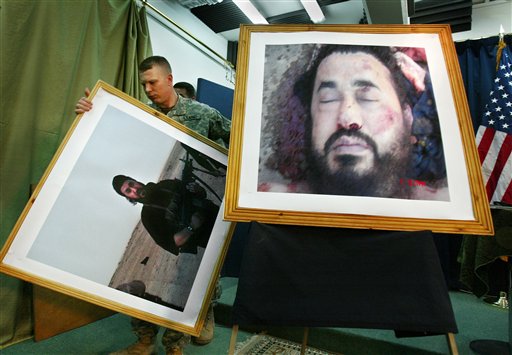
Now that Al-Zarqawi is dead. . . . what?


No doubt it is a good thing that Al-Zarqawi has been killed. He was a truly wicked man whose obsessions with jihad could not allow him to make discriminating judgements between warriors and civilians or between enemies and innocents. In his mind (and I assume in the minds of all those who embrace radical Islamist ideology) all those who are not for you are against you. Just consider his efforts and successes at killing non-Sunni Muslims.

He has been called evil by many; and no doubt he was. But, even as that description is applied to him we might stop and ask ourselves the question: What does that mean?

The Christian theological tradition has been consistent (with some popularized exceptions) in its insistence that evil is not an actual principle in and of itself. Rather, evil in the Christian tradition has been understood as a distortion and perversion of the Good. (If one believes the biblical witness that God made all things and at the end called them "very good," then he can see how evil could not be thought of as an actual entity or principle in itself. It is, in the words of a baptist friend of mine, always parasitic.)

This theological conviction, applied to the likes of Al-Zarqawi, would lead, I think, to the affirmation that the hideous wickedness that he became was the result of perverting some other impulses that he might have had that might have been, if ordered differently, good. For instance, if he really wanted to bring glory to God, what if that passion had been directed by discipleship after Jesus Christ, seeking to follow his example? Or similarly, if he was truly interested in the integrity of Arab culture, what if he had fought for the best expressions of equality that one can find in Muslim ethics? (Remember, many of those who are working feverishly to rebuild Iraq now are devout Muslims, such as the police officers who risk their lives daily.)

But, tragically and horrifically his passions were misdirected. And he became evil! His life became a perversion of that for which God had made it. Instead of serving humanity he attacked it, because he did not think all were worthy of God's love and mercy. His ideology drove him to distort the image of God within him. And all his sins (his ideological transgressions and his muderous acts) were so serious in the eyes of God that Jesus took in his own body on the Cross. And he shall be judged by the very one who bore his iniquities. At his judgement the nature of reality was (or shall be, I don't pretend to know exactly how it all works) was revealed to him. No doubt, in the light of Jesus Christ an explosion of truth about himself took place that causes the two five hundred pound bombs to seem silent.

So, what should the Christian response to all this be? Well, of course, gladness that a terrible threat to innocent human beings has been ended, for a world filled with threats is a fallen world. Certainly we should have a sense of just deserts (one does reap what he sows), for a world without justice would be torment. But, as well, we should be saddened that a life for which Christ died was so, so marred, to the point that his eyes could reflect the very character of the devil. A world that lacks the grace to see the pitiable even in the most deserving of death is Hell.

Perhaps we ought to take a cue from J.R.R. Tolkein, who has Frodo in Tolkein's "Lord of the Rings," looks at the disgusting and dispicable Gollum and be both repulsed by his evil and filled with pity that a creature not meant for that end might come to that. Acknowledging the terribleness of sin and the necessity of it being judged and feeling sorrow for the one whose soul is lost, that is the way of Christ.

"Even so, Lord Jesus, come quickly" (Revelation 22:20).

Thursday, June 08, 2006

Jesus-talk is PG

The Motion Picture Association has determined so any way. This is the story

Donald Wildmon's organization the American Family Association is pretty miffed about it. This email broadcast was sent out.

Take Action

Send an email to the MPAA asking them to stop their anti-Christian bigotry.


Click Here to Email the MPAA Now!

Or paste this link to your browser
https://secure.afa.net/afa/afapetition/takeaction.asp?id=201

NOw if you want to click on it go ahead. But before you do, ask yourself the following.

1. Does it surprise us that people would find a story about "following Jesus" something that parents ought to be aware of? If so, why? A call to discipleship is, of course a great blessing to all who respond to the invitation, but to come to Jesus is to have one's life radically altered. Has the church ceased to believe this and now we think of Jesus as 'harmless?'

2. Isn't Jesus always going to be "objectionable" to the world? St. Paul said that he was foolishness to the Greeks and a stumbling block to Jews. So, why the outrage? Do we just want everybody to make nice about Christ?

3. When the early Christians were called Athiests because they worshipped God in Christ exclusively, did they complain?

4. Even if the MPAA is really trying to hinder a Christian witness, should the first response of Christians be to petition them?

5. Do we have no memory of the believers in the book of Acts who "counted it a joy to suffer for Christ (Acts 4)?

Let's give thanks that the exclusive call of the Gospel that is inclusive of all is thought of as challenging and scary. Maybe in our multi-cultural, relativistic world it might begin to get noticed again. But, the church will have to be willing to be seen in marginal terms.

Wednesday, June 07, 2006

What is Most True about ourselves ?


This coming Sunday at churches in Western Christianity - minus some evangelicals and fundamentalists - Christian's attention could be especially concentrated upon the answer to that question, for this coming Sunday is Trinity Sunday.

What is most true about ourselvea is this declaration of faith: God is Three Persons in One Godhead. Mystery? Sure! But if we are made in God's image, then the only way to begin to comprehend our own existence is by at least realizing a few of the implications of this article of faith. So, some quick thoughts.

1. God is Three Persons: Father, Son, and Holy Spirit. God does not simply manifest God's presence in three ways. That is an ancient heresy called modalism. If God is Three and yet one God, this means that there are distinctions that are made within the very essence of God. And the Father is not the Father without the Son or vice versa. Nor are the Father and the Son really the Father and the Son apart from the Holy Spirit. Persons, therefore, even divine persons are defined in relationship to and openness toward another. So, it should not surprise us that human beings are made for a human community. This is the great sadness of western individualism, especially in many churches, it denies a fundamental reality -- we are only truly ourselves in community.

2. God is Three Persons perfectly: The Father, Son, and Holy Spirit are completely self-defining and self-fulfilling. God needs nothing else beyond the Triune life for fulfillment. This would mean, thereby, that God is perfectly "glorified" in the fellowship of the Triune life. And the perfect completeness of the Triune One is the perfection of love. Hence I John 4 can declare that God IS love. This means more than that God is loving toward us. As Charles Wesley declares in a hymn "Thy nature and thy name are Love." All else that we predicate about God must be articulated in the light of this reality. Holy, Just, Righteous, you name it. We must begin to understand God in our lives in terms of God's being Love.

3. God is Three Persons in completeness: God "gets" nothing from making us. The purpose of the creation of the world was not so that God could be glorified, although the creation does bring glory to God. Even further, the purpose of our existence is not first and foremost to glorify God (sorry Westminister). No, if God IS love, then the purpose of our lives is to be loved by God, which we are. But further, the purpose of our lives is to open ourselves to the One who is Love and who wants us to know that Love. God made us, in other words, to love us. The grave tragedy of sin is that it denies this truth as we attempt to live in fear of the One who is the Holy Other who alone can fulfill the meaning of our lives, for we were made for him and his love. As ST. Augustine says, "Our hearts are made for Thee and we are restless until we rest in Thee."

4. God is Three Persons in utter openness: The Triune God made creation simply to love it. But in order to love it truly he had to create it with its own integrity and liberty of action. For loving, as defined by the Triune Life is always free chosen. The Gospel of John makes it clear that the love of the Son for the Father and the Father for the Son is not some metaphysical principle, but is freely given and received. So, the Triune One makes the universe and us humans as the crown of creation simply to be able to live for that which is not God's own self or essence. And to continually woo us to wholeness and holiness.

5. As those who bear God's image we are made not only to receive God's love, but to express this same love, through the power of the Holy Spirit -- God dwelling in us -- to others and to the creation. The word the New Testament develops for this kind of love is Agape. It is the love that does not seek a return -- that Eros. Neither is it a love that is limited to those we naturally like -- that could be phileo. Agape is an open, self-offering love that receives the other and offers the other life and hope and joy and peace. That is the life of holiness that we are meant for in the community of the Church. But not limited to the Church, for the Church, if it manifests the image of God at all must, as does the Triune One, live for the world's redemption.

Good worshipping this Sunday and good discovering your true self.

Billy Preston and Baby Boomers

Billy Preston, muscian from the early 70's and beyond, has died. I remember dancing and "grooving," as we used to say, to his music as a high school student. His passing is one more reminder to my generation that our days are numbered -- individually and generationally.
Preston's most famous song was entitled "Nothing from Nothing Leaves Nothing." That's not a bad thing for those of us who want to live meaningful lives to remember.

If we build our lives on things that don't last for eternity, then we are building on "nothing." And when you consider a life that has lived for things that don't last and it comes to an end, then you have nothing really left.

Let's recall the words of St. Paul in I Corinthians -- If we build on the foundation of Christ with wood and hay and stubble, then it will all be lost in the fire of God's holiness. The person might be saved, but it will be as one who has escaped the fire and has nothing left.

Link to news about Preston

Projections and Prices


I's no economist nor the son of an economist (to paraphrase the Book of Amos), so maybe someone can help me with THIS

The oil futures market seems incredibly volitile and drives prices in a way that is utterly unconnected to reality. For instance the article linked above says:

Oil slipped on Tuesday after Iran said world powers had made positive proposals to end a crisis over its nuclear program, opening the door to more talks.

Oil swept to a record $75.35 in April as the dispute between Iran and the United States rumbled on. On Sunday, Iran's Supreme Leader Ayatollah Ali Khamenei said oil flows from the Gulf would be endangered if Washington made a "wrong move."

Now the futures market bounces up and down in a couple of days dramatically over possible fears? How is that realistic and helpful for anyone but those who are trying to manipulate a market to make money?

Tuesday, June 06, 2006

The Emergent (?), Emerging (?) or Emerged (?) Church


Chuck Colson offers some thoughts on the emerging church

His observations are interesting and worth a read. But here's my take partially.

The interesting thing about the e.c. movement to me is that it seems to be little more than a reaction to various forms of Protestantism -- those that reduce the life of faith to either doctrinal assertions (fundamentalism) or social activism (liberalism). Much of the emerging church movement seems to want to rediscover mystery and vitality, and to recover a sense of community in the faith. Great!

However, the problem with many emerging church leaders is their seeming unfamiliarity with the profound depths of the Christian tradition. Want mystery? consider the great sacramental liturgies of the faith across the ages! Want vitality? look to the lives of the great saints of old. Want community? consider the Church alive in the first three centuries, or in the Franciscan renewal, or the Victorine community, or the Devotio Moderna that produced Thomas A' Kempis, or look at the Methodist Societies under the leadership of the Wesley's, or think Pheobe Palmer prayer meetings.

The secret to vitality is not to endeavor to "deconstruct and reconstruct Christianity"
because one is faced with so-called "postmodernity." Nor is mystery discovered by endeavoring to make the Gospel relevant to the post modern mind. Nor is community found in any set of values based on human post modern longing for authenticity and relationship.

No! The secret is found in real and true orthodoxy that produces ortho-praxis (right-living) and ortho-pathy (right sentiment) when lived in ortho-communion. Truth, life, affection, and belonging are found by rediscovering the submerged church -- the one that is lost when we try to define or redefine the Body of Christ in any terms other than those of revealed apostolic truth.

If the ECers are after that, then hurray! If they hedge on any of it then, fogitaboudit!